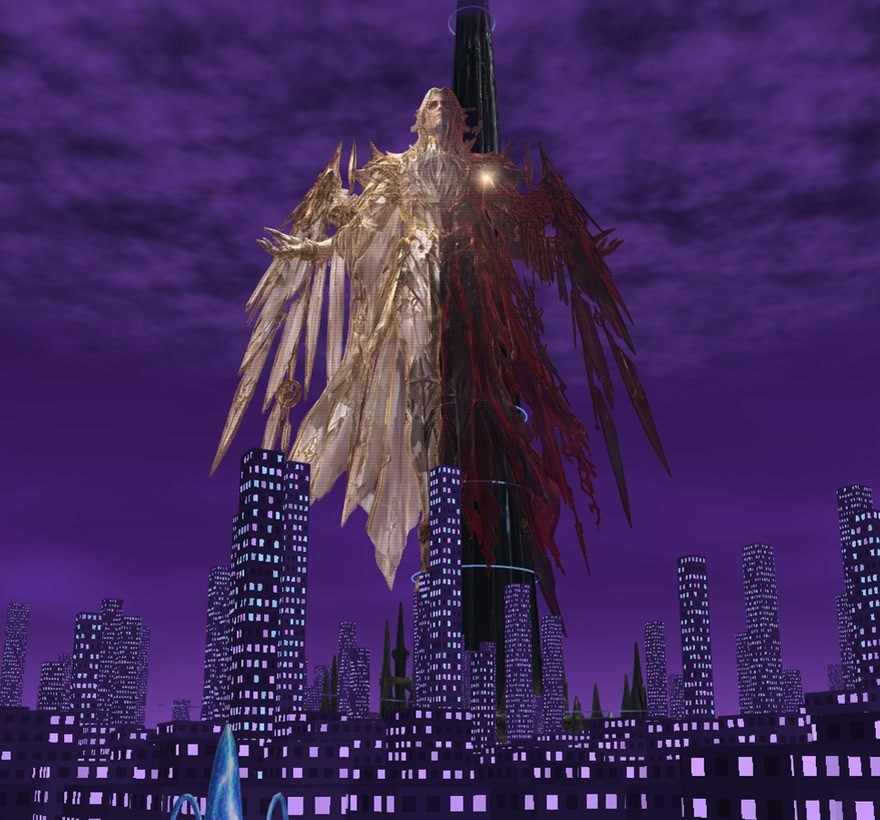

From a campaign book to a living city
Hi, I’m Rocky. I make The Central Nexus on my own, and people keep asking me how one person builds a game like this. So for the first devlog I want to show you the whole process, start to finish, with a lot of pictures. Everything here comes from the development build, so expect things to keep changing.
It started as a book
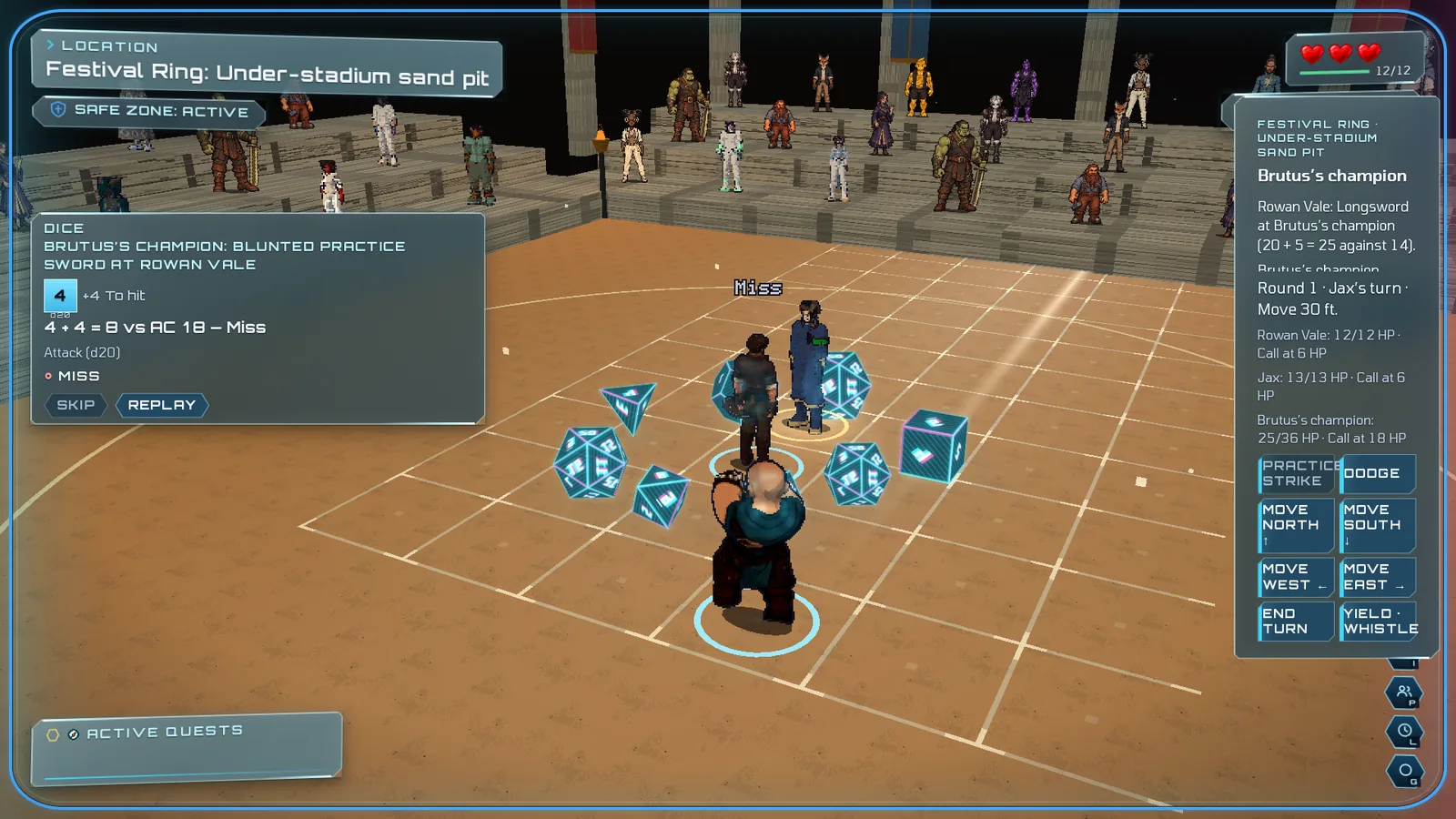
The Central Nexus began as a tabletop campaign. Before there was any code there was the book: the city, the Tower, the people who live there, the races, the festivals, the jobs on the notice boards. It uses fifth edition rules (the SRD 5.1), so when you try something risky in the game a die gets rolled, and you see the numbers.
I keep one rule for myself: the game follows the book. If the book says the barkeep is a black-bearded dwarf in a leather apron, that is who stands behind the bar. If the book says a rescue goes a certain way, that is how it plays.
Step one: a drawing from four sides
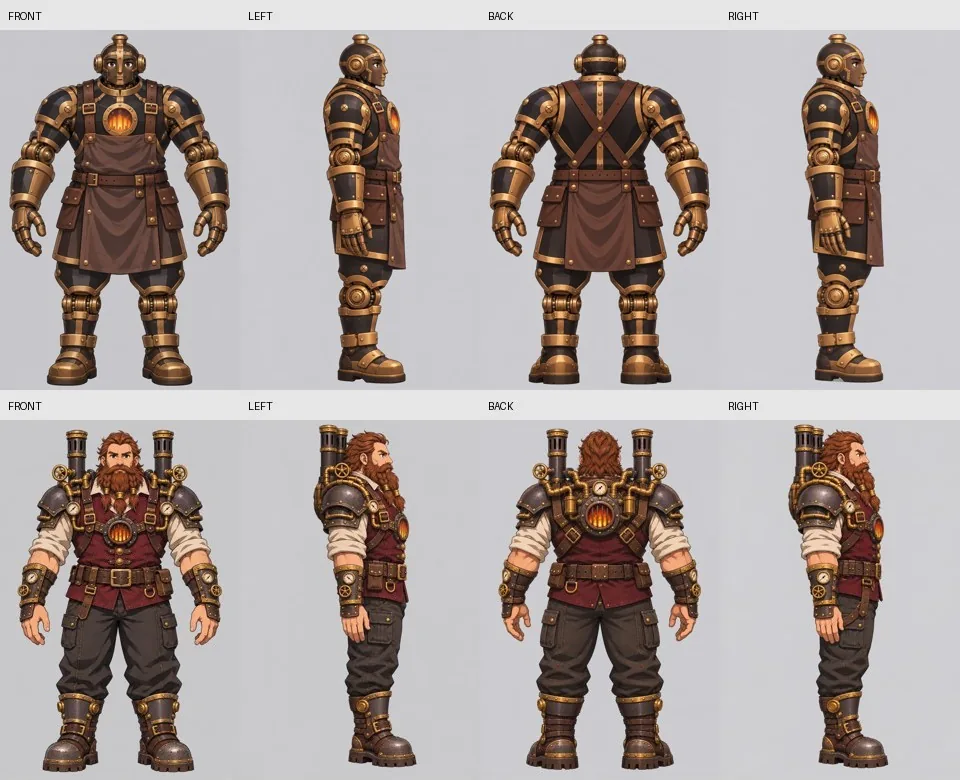
Every character starts as a drawing. Not one picture, but four views of the same person: front, left, back and right, so the 3D model knows what the back of a coat or the side of a helmet looks like. I write a look card from the book for each race and character, and the sheets are drawn from that. It takes a lot of rounds. Every sheet gets checked against the book and against the characters already in the game, so everyone feels like they live in the same world.
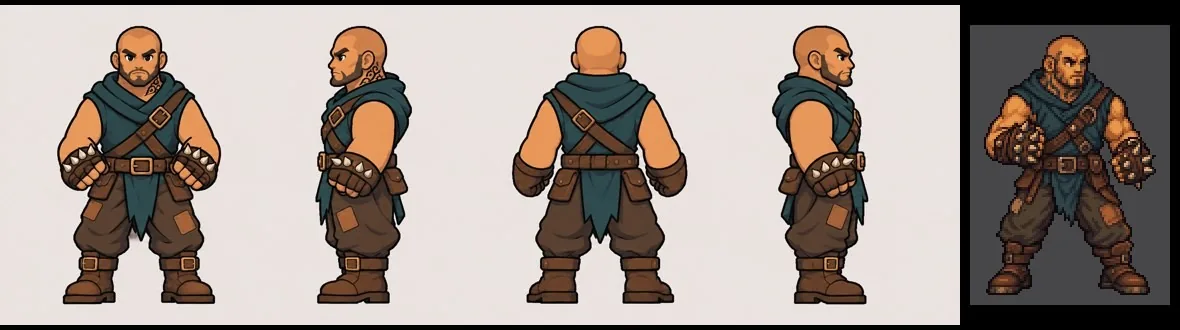
One thing I learned the hard way: a drawing can be beautiful and still be wrong for the game. An early sheet of Jax, one of the fighters in the Festival Ring, came out far too realistic. He got redrawn to match his sprite, and now the drawing and the game look like the same person.
Step two: Tripo turns the drawing into a model
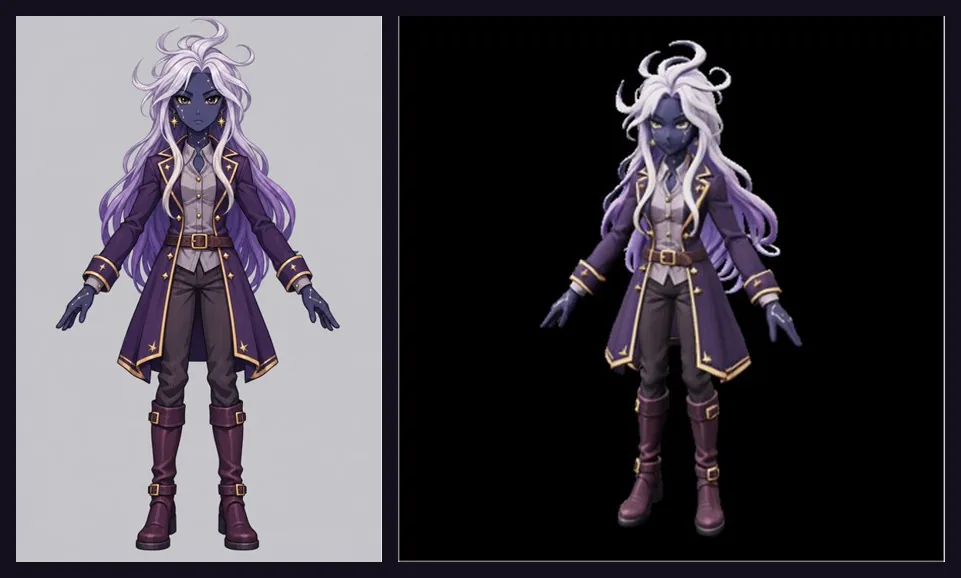
This is the part that still feels like magic to me. Tripo takes a character sheet and builds a full, textured 3D model from it, which then gets a skeleton so it can move. Every one of the 39 playable races has its own model made this way, and so do more and more of the people you meet in the city.
Step three: toon shading, motion and a pixel finish
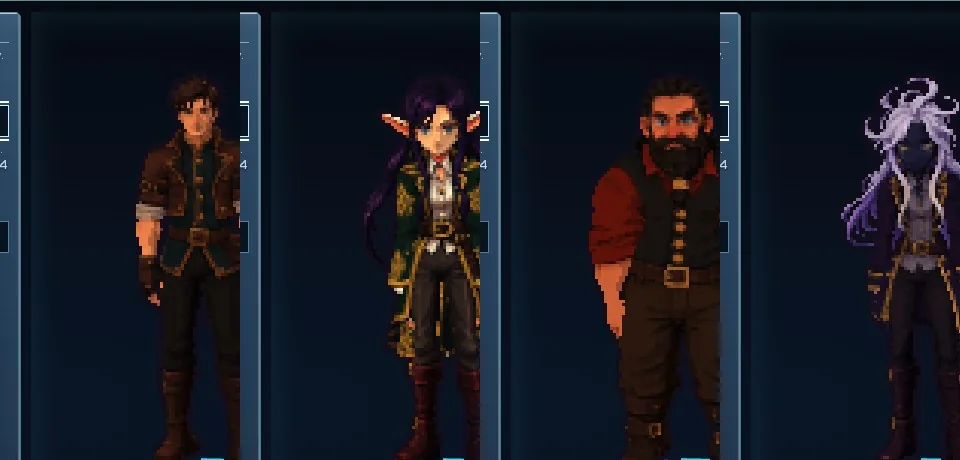
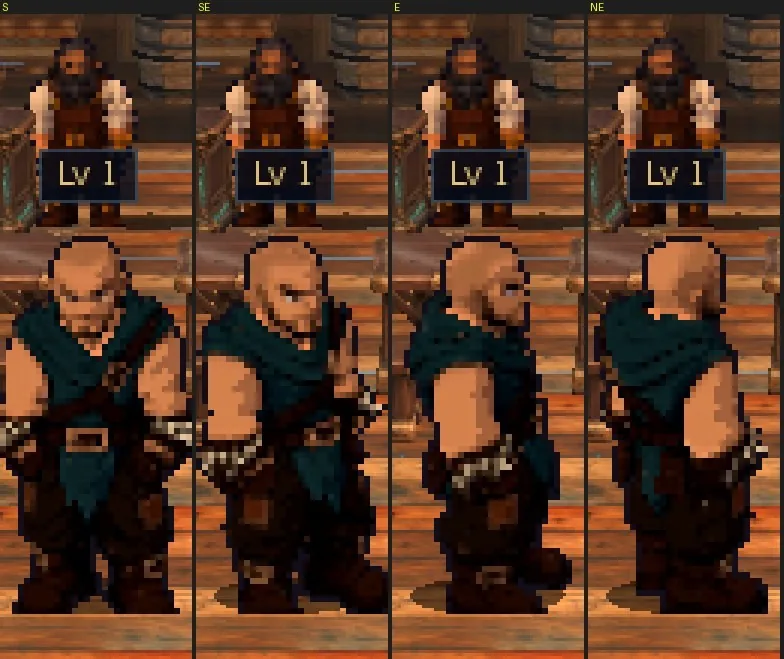
A raw 3D model doesn’t look like The Central Nexus yet. Each one is rigged and given motion clips (walking, swinging a sword, casting a spell, taking a hit, going down), some from Mixamo and some finished by hand. Then it’s drawn with a toon shader and an outline, like cel animation. Last comes the pixel finish: the character is drawn through a pixel layer at game size, so it reads as detailed anime pixel art while still turning in all eight directions and moving smoothly. Small folk like gnomes and halflings get a finer pixel grid so their faces still read.
Faces are the hardest part. I zoom in to four times size on every face before I call it done, and plenty of them have gone back for another pass.
39 races, 78 bodies
The book has 39 playable races, from elves, dwarves and halflings to the Nexus’s own, like the Living Doll, the Tide-Born, the Aegis-Shell and the Starfallen. Every one of them now has both a male and a female body, so that’s 78 bodies, each one checked in the game. They’re meant to differ in shape, size and the way they move, not be one body with a new colour.
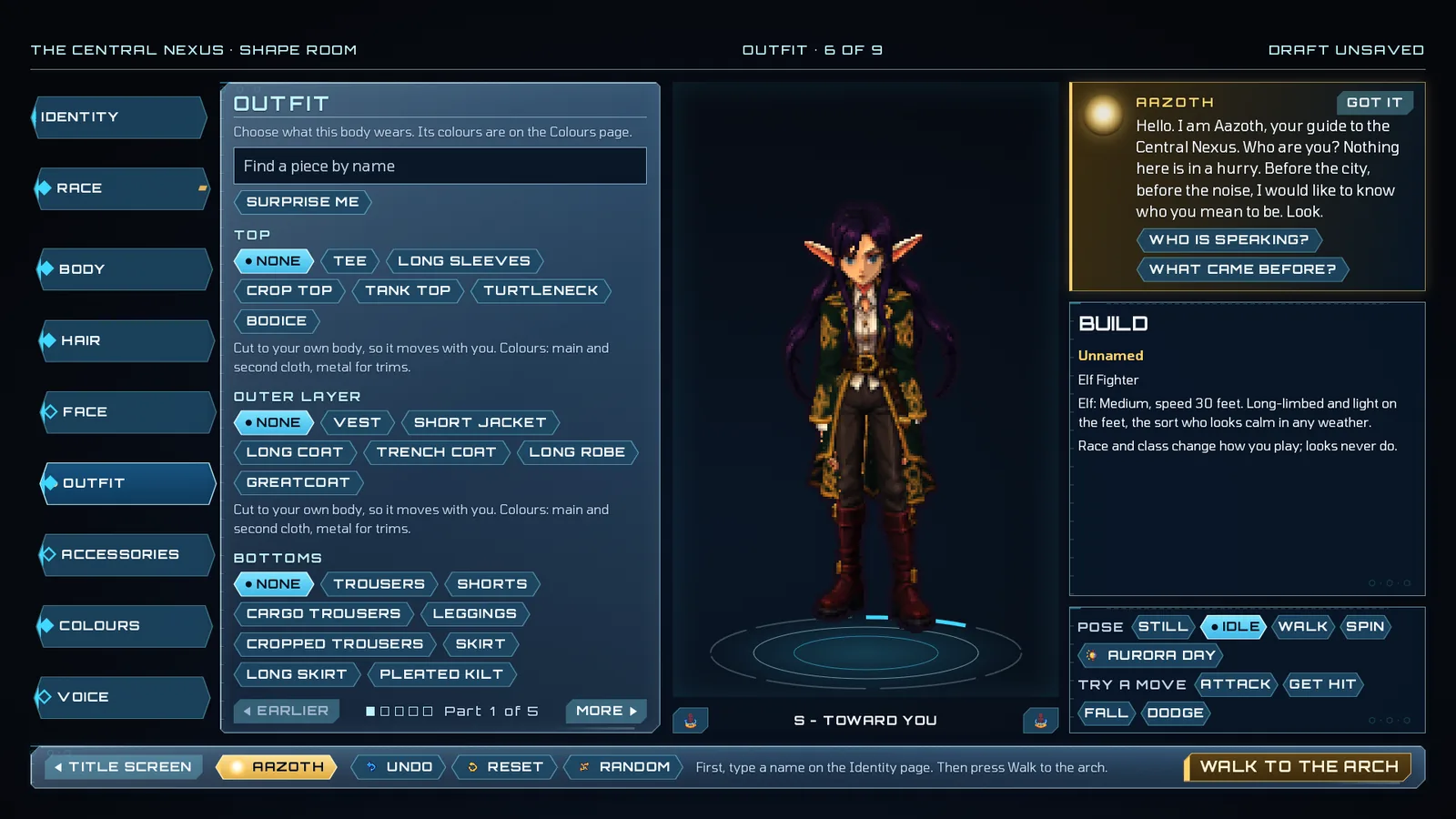
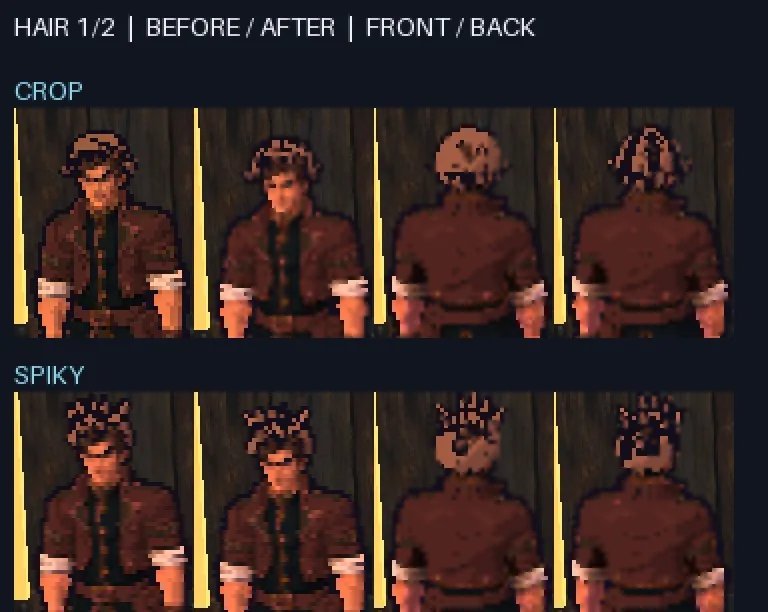
In the Central Nexus you can be anything, so the character creator matters a lot to me. You pick your race and body, then hair, face, outfit, accessories, colours and voice, and you watch your hero on a pedestal while you choose, turning around and trying out moves.
A town that lives
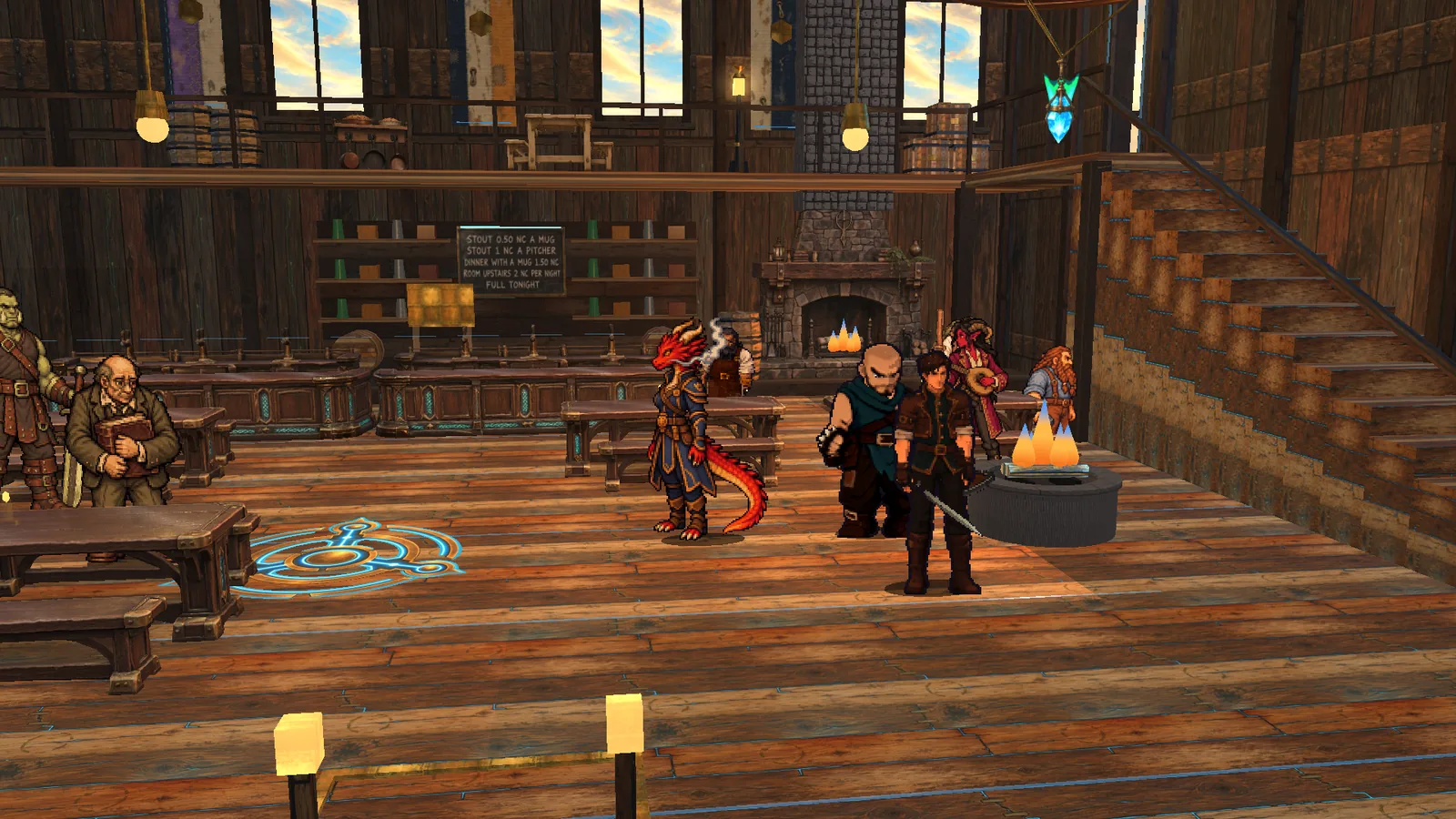
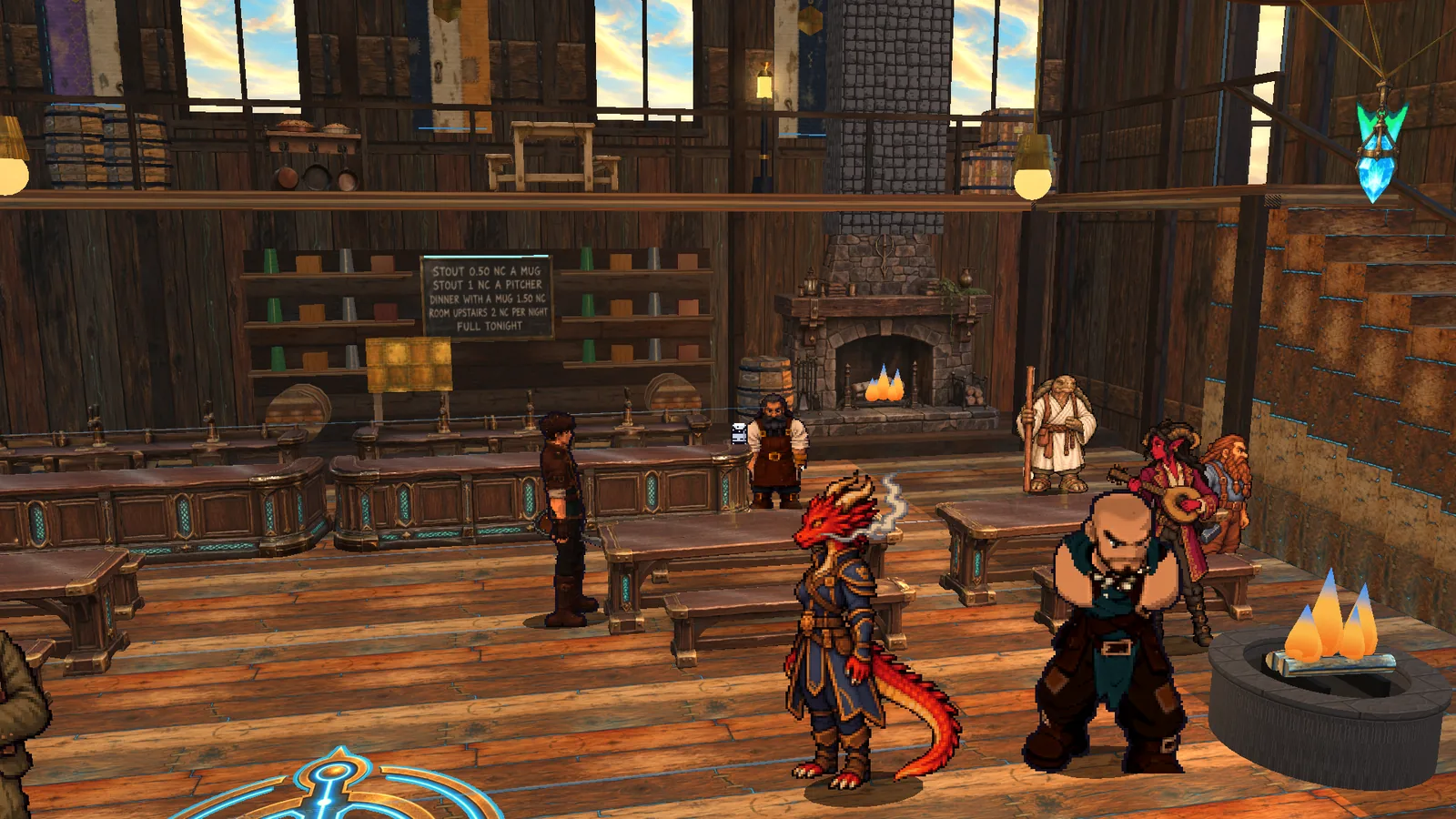
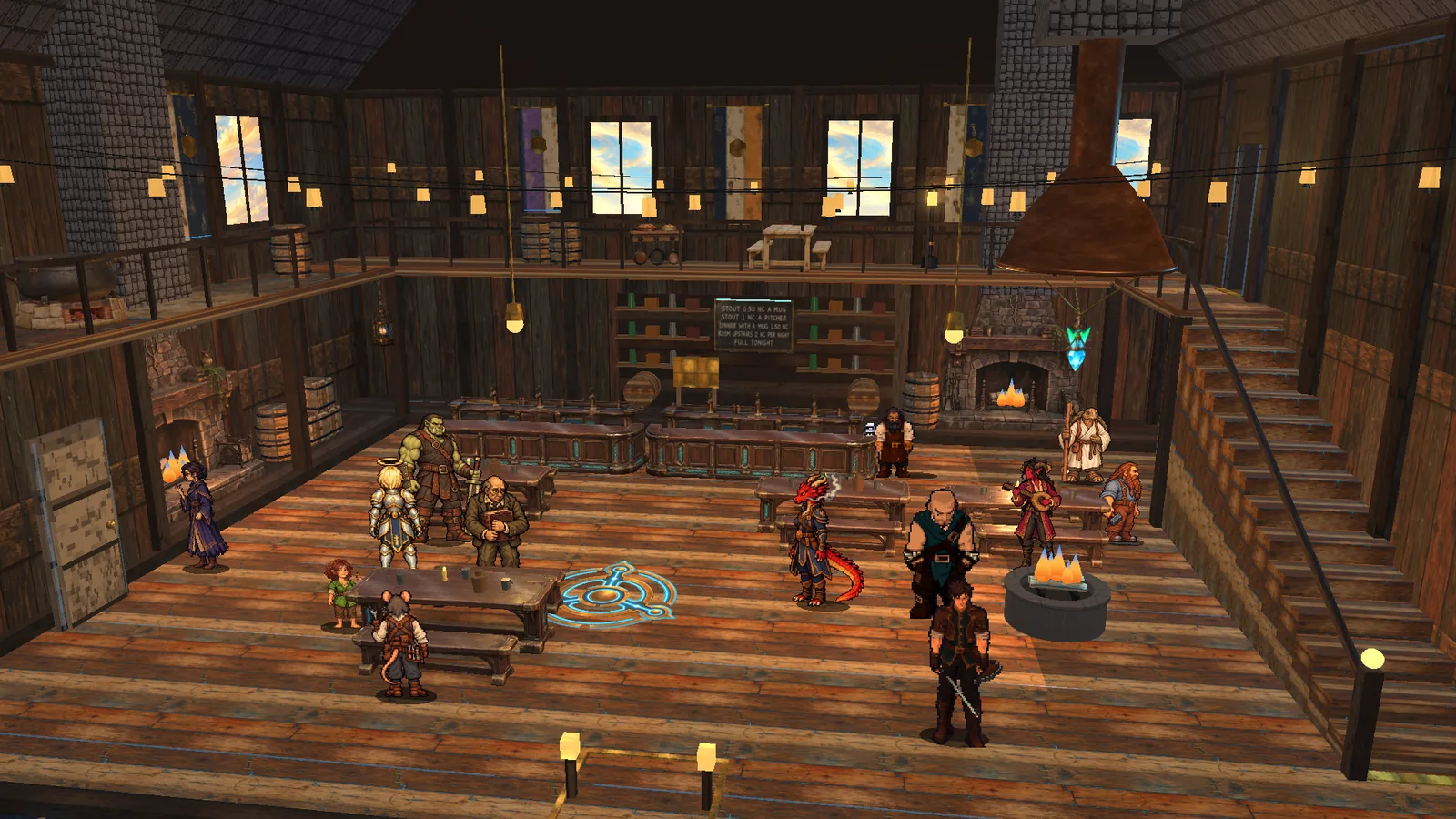
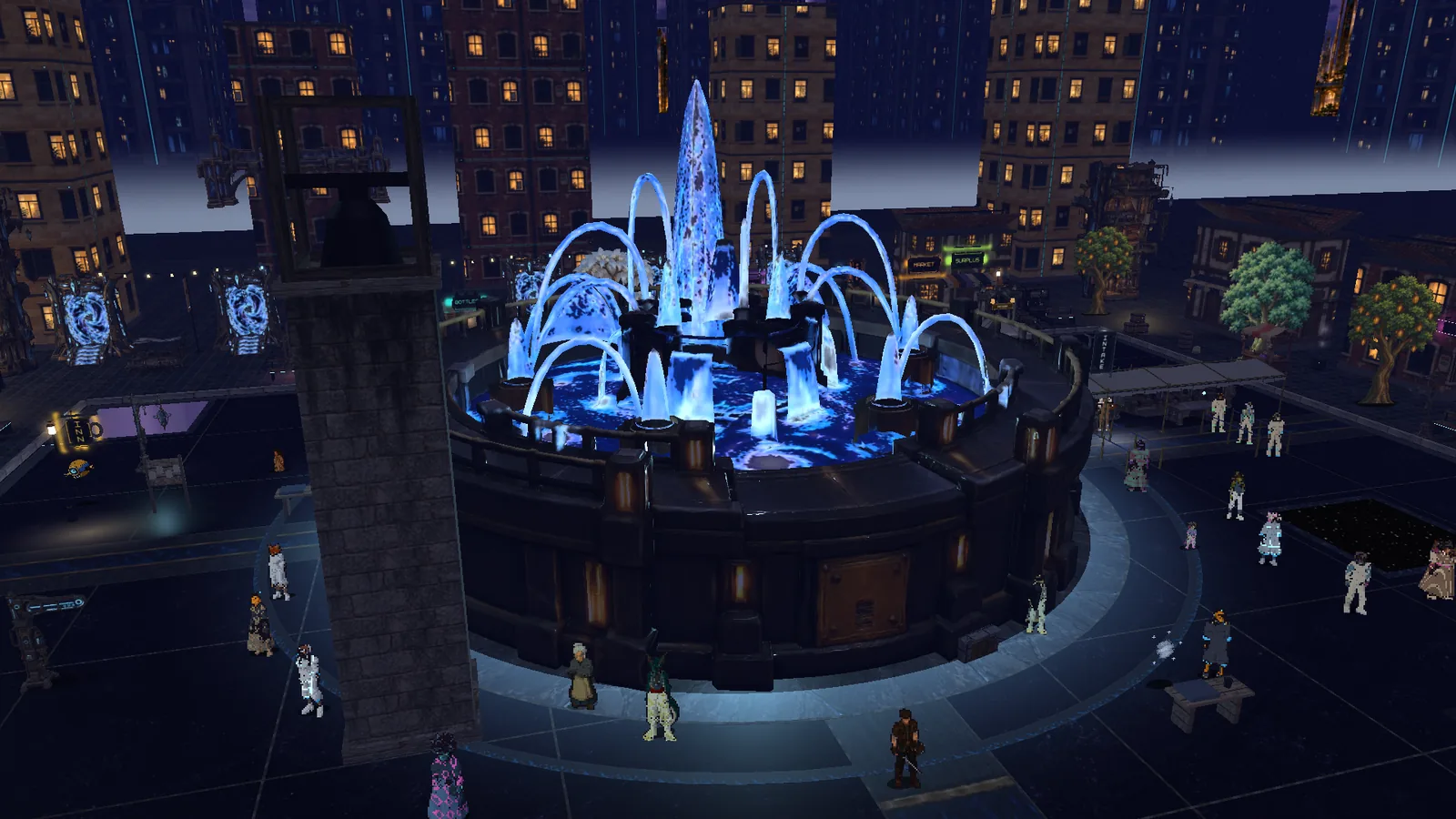
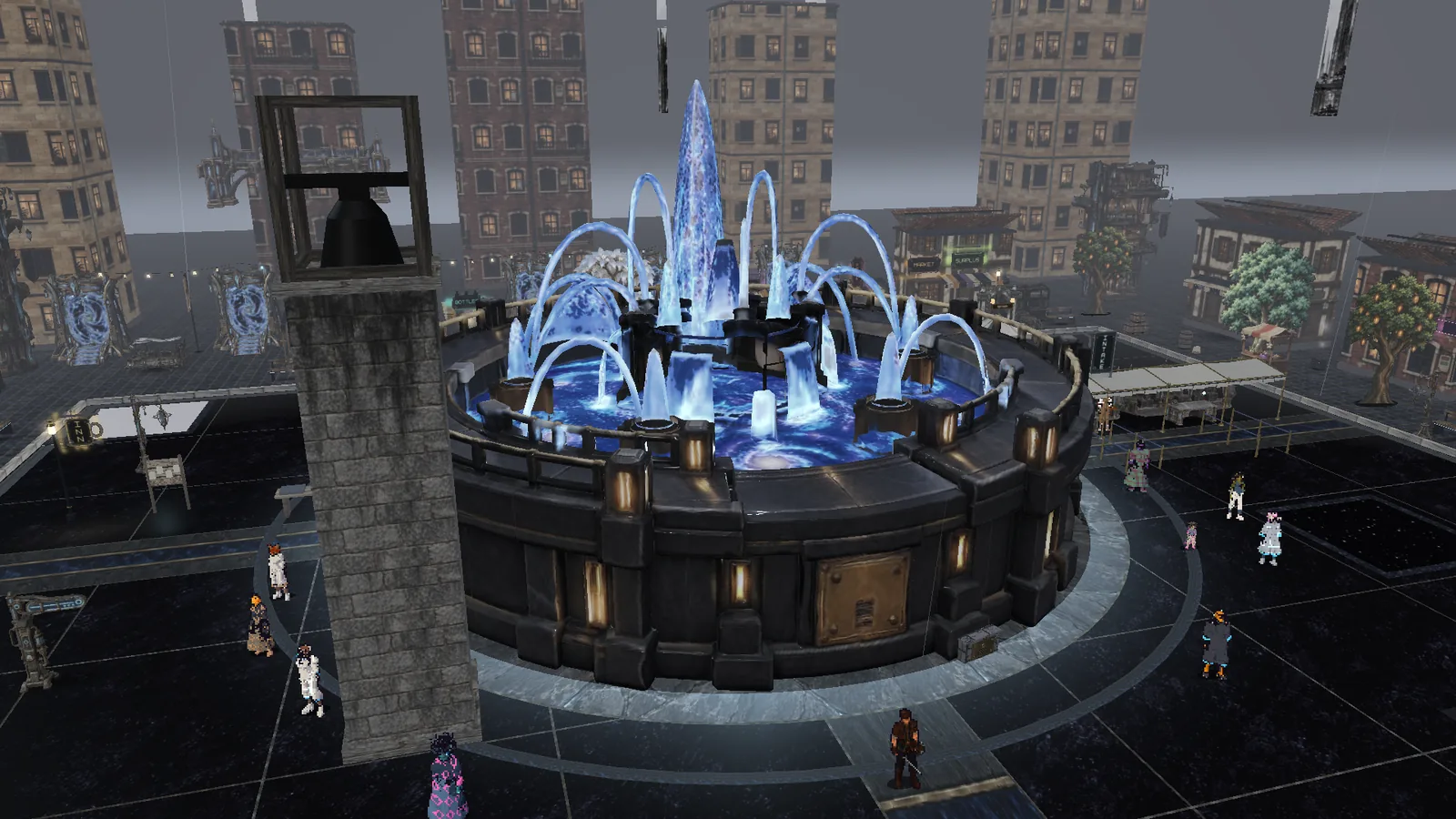
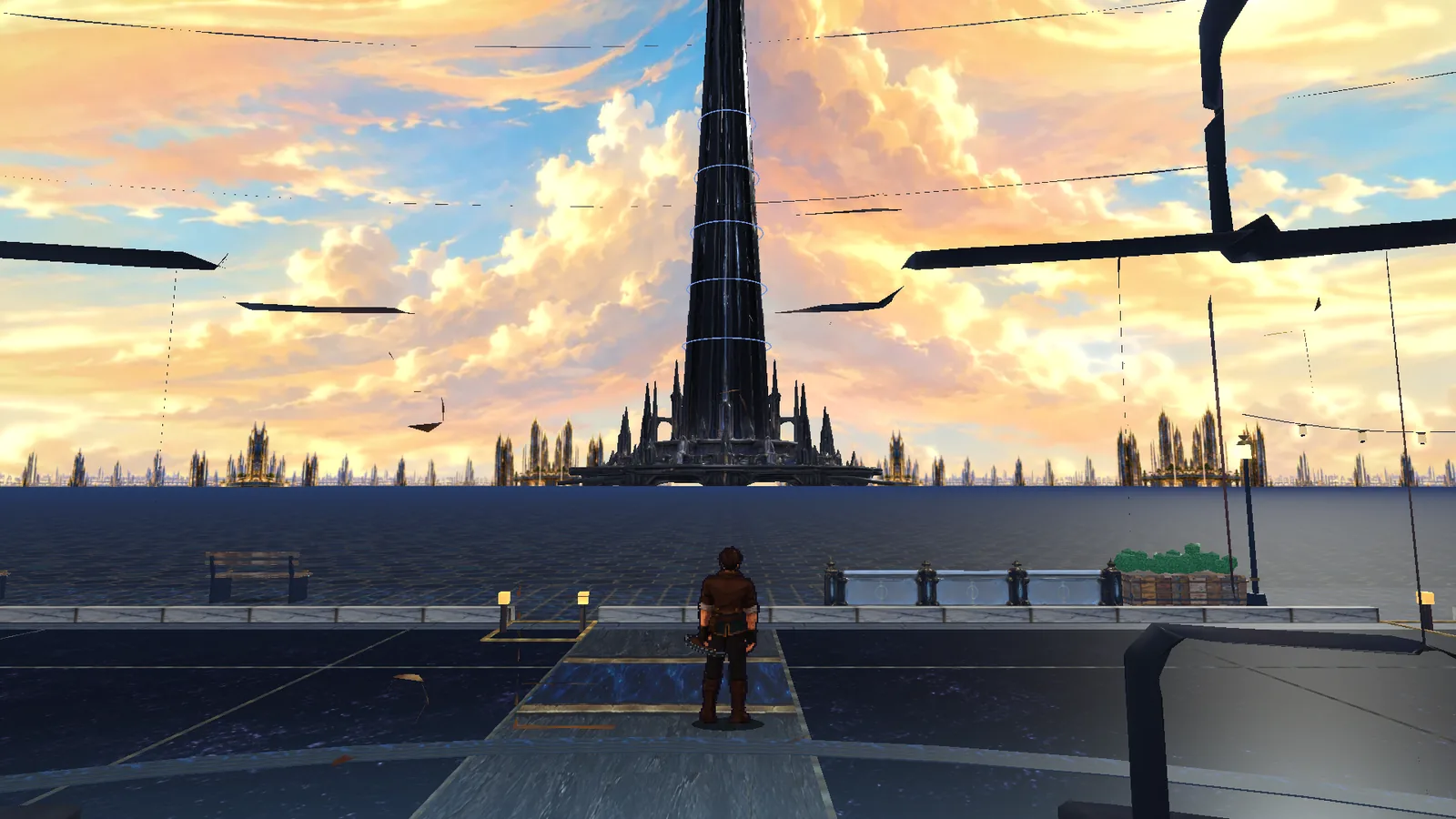
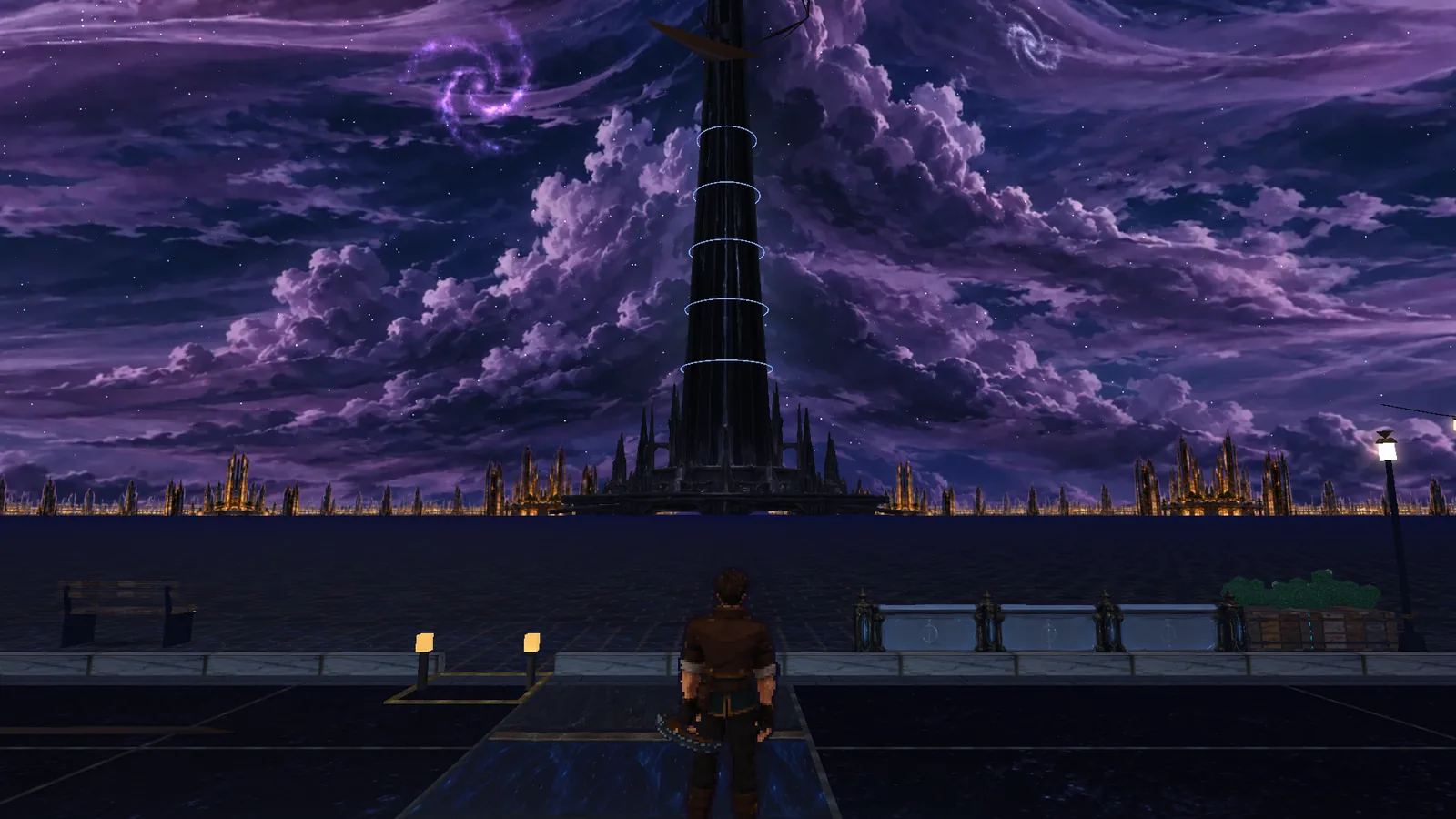
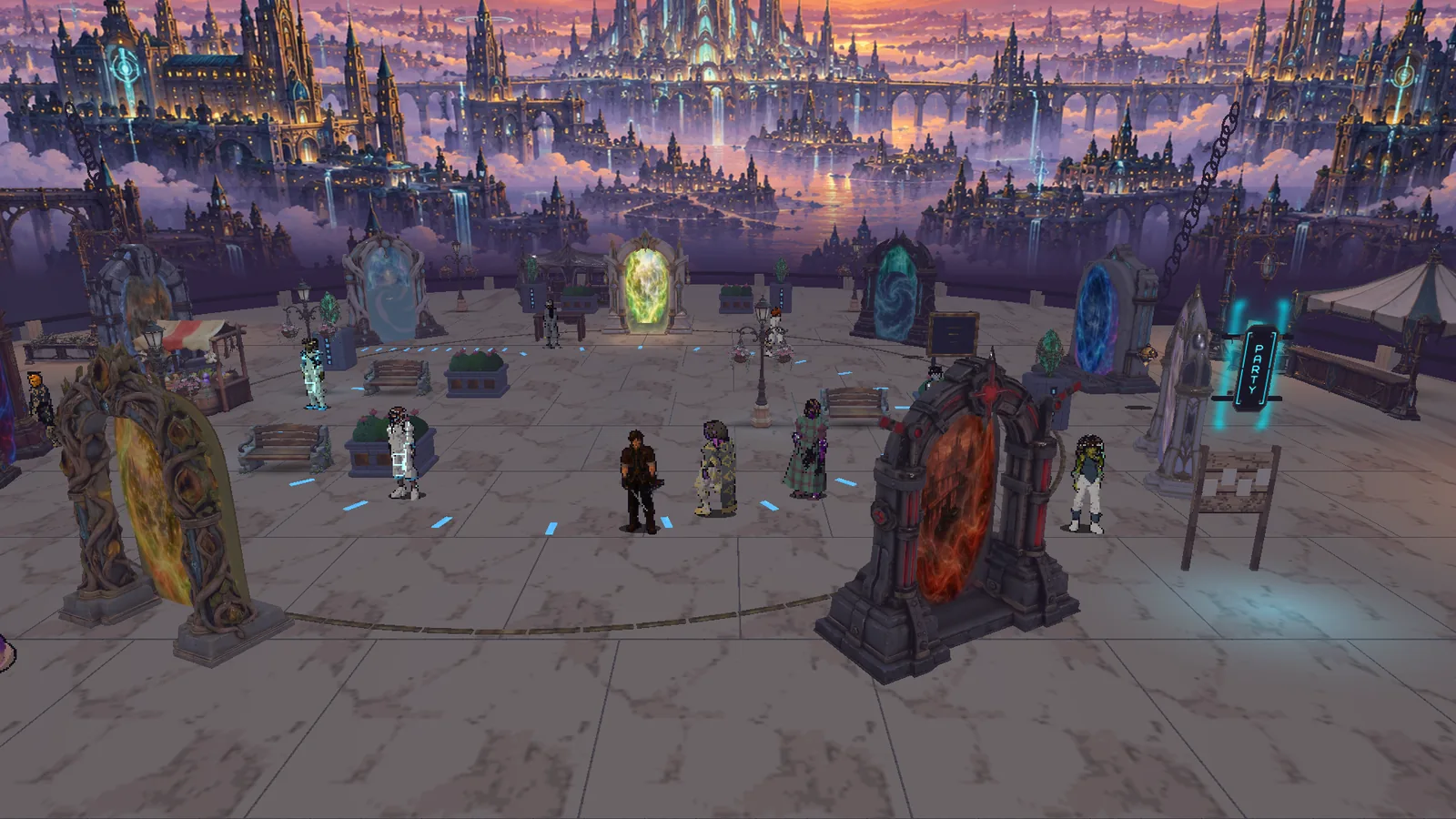
The hub is meant to feel like a real place, not a menu. The Endpoint Tavern is busy, the First Light Fountain glows at night, the weather changes from save to save, and the sun and the stars move over the city. The people who live there are becoming 3D toon characters too, built the same way as the heroes, so in my current build Garnac behind his bar and Jax in the Festival Ring turn and move just like you do.
Portal Worlds
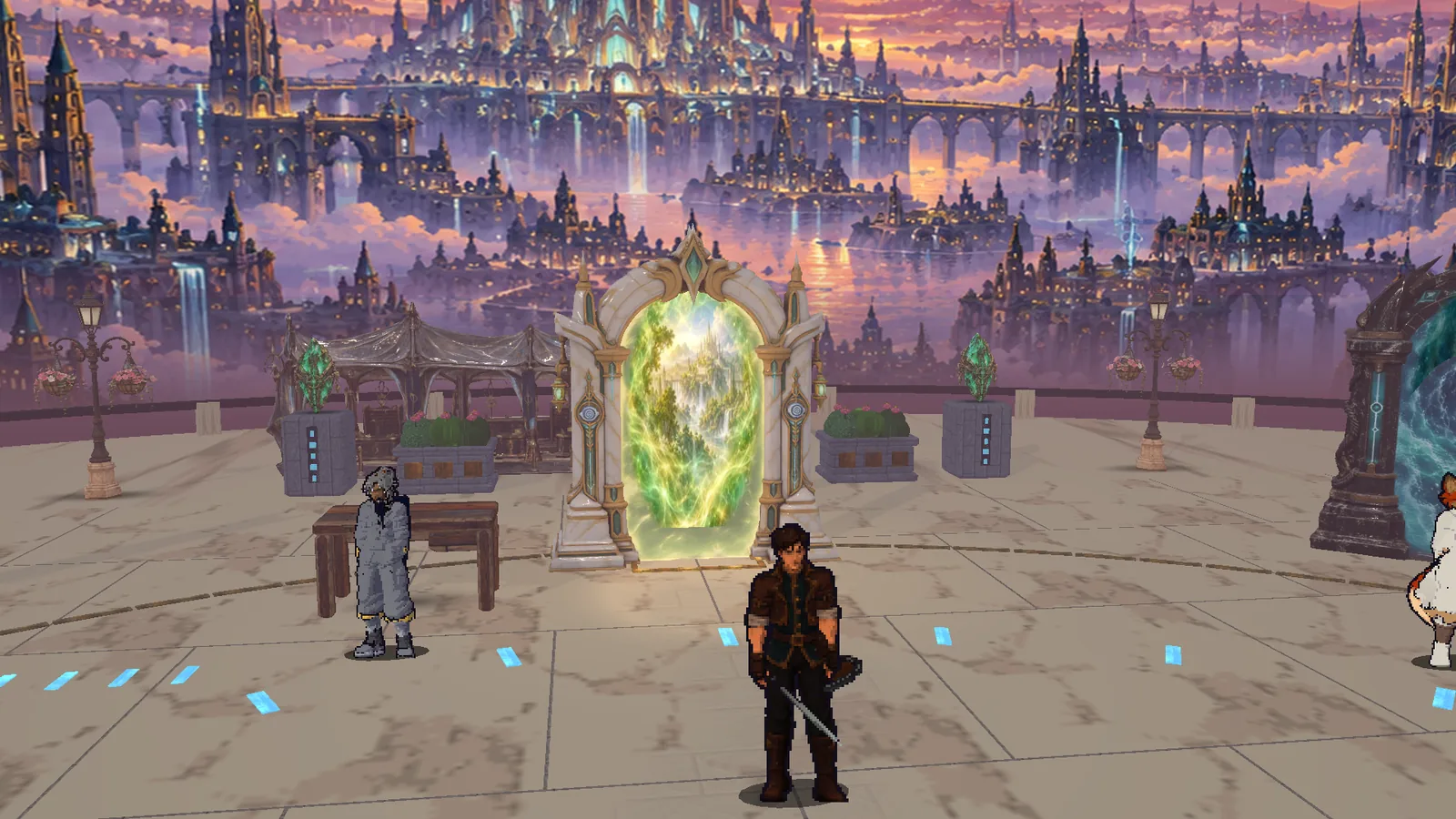
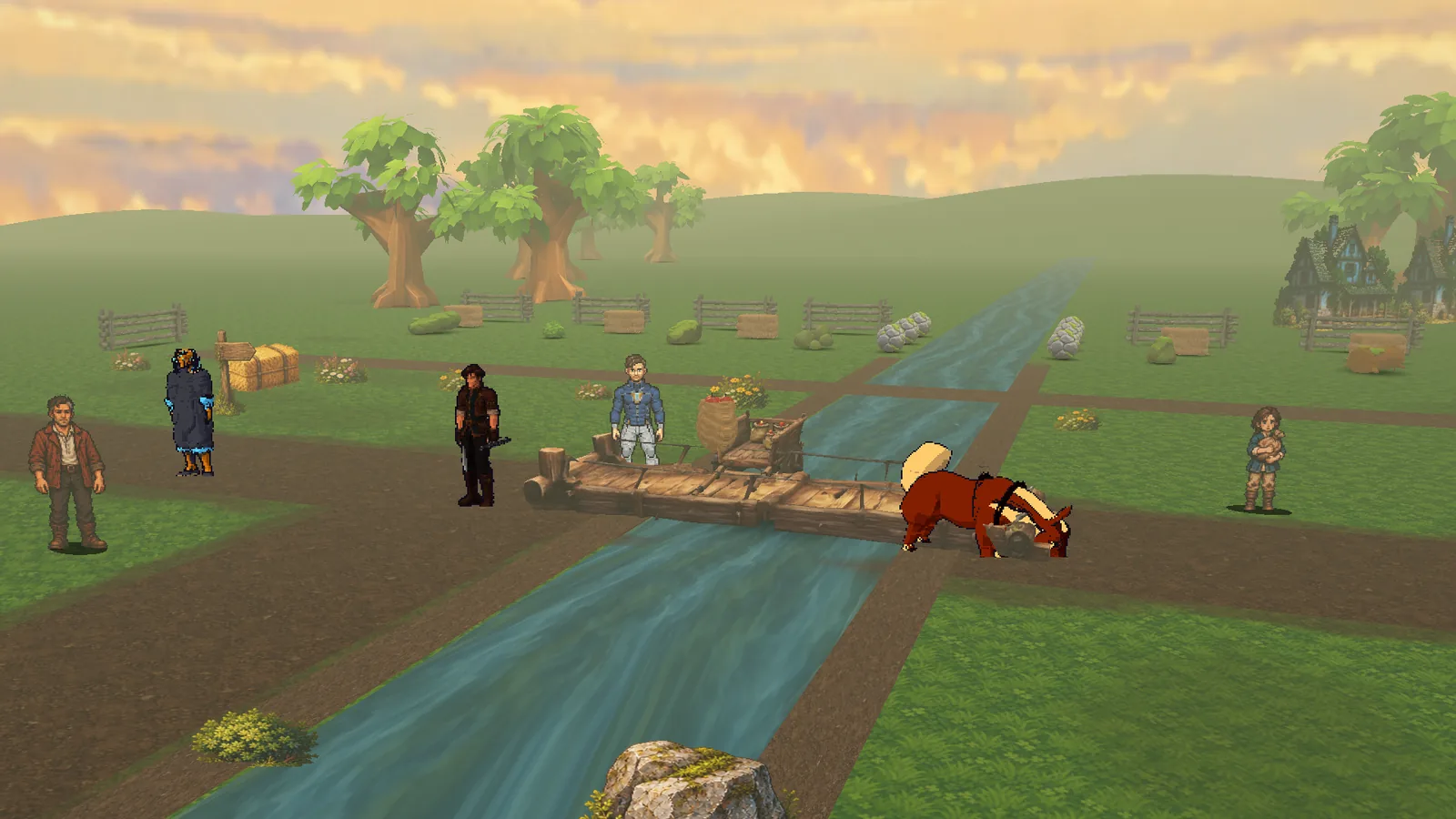
In the Portal Plaza, the portals lead out of the city into whole other worlds, each in its own genre. The demo already lets you step through one onto the Tilted Waybridge, a farm road where a cart is in trouble and how you help is up to you. More Portal Worlds are on the way.
Thank you, Tripo
I want to say a real thank you to the team at Tripo. Their tool is a big part of how one person can build a cast this large, and they have just gifted me a Max membership to support the project. That means a lot to me, and it goes straight into the game: more characters, more monsters, more of the city. Thank you.
What’s next
A big update is coming. Full character customization: hairstyles, clothes fitted to every body, colours and accessories. The weapons and armour from the book, with their real rules. And monsters, made the same way as everyone else. I’ll post here as it comes together.
Come and play
The free demo runs in your desktop browser. It’s an early build, and the most useful thing you can do is play it and tell me what breaks, what feels good and what doesn’t. I read every bit of feedback.
If you’d like to help keep the updates coming, you can support the game on PayPal. It’s completely optional and doesn’t unlock anything. Thank you for being here.
See you in the Nexus. Rocky